Tuesday, November 18, 2008

Session 11 - Finals Exam, Nov 19, 2008

Dear Students,

We will have our exams tomorrow in a different, bigger classroom. 

Kindly proceed to room 3K 102, our exam will be from 3:15-4:30pm.

Good luck on your examinations!


Wednesday, November 12, 2008

Session 10 - Conflict, Peace and Security, Nov 12, 2008

I. Readings on Conflict, Peace and Security
Rob McRae, “Human Security in a Globalized World,” in Rob McRae and Don Hubert, eds., Human Security and the New Diplomacy: Protecting People, Promoting Peace, Montreal: McGill-Queen's University Press, 2001, pp. 14-27. (Hardcopy at 3K205).

Recommended:
Lotta Harbom, Stina Hogbladh and Peter Wallenstein, “Armed Conflicts and Peace Agreements,” Journal of Peace Research, vol. 43, no. 5, pp. 617-631. (Hardcopy at 3K205).

II. Videos on Making Peace, Preventive Diplomacy and Human Security
1. Israel and Palestine: The Challenges of Making Peace (15min) - [How Stuff Works]
View video through this link. 
 
2. Building Political Will for Conflict Resolution (11min) - [EastWest Institute]
View video through this link.

3. Human Security Research [ARCHS -Coventry University]
The Applied Research Centre into Human Security (ARCHS) looks at issues such as climate change, terrorism and sustainability. 


4. David Held on Democracy and Human Security (May 07, 2007)
David Held discusses the challenges and misconceptions surrounding democracy promotion, and Canada`s position as a promoter of democratic governance.
David Held is the Graham Wallace Professor of Economics at the London School of Economics.


III. Review Points

IV. Discussion Questions

Wednesday, November 5, 2008

Session 9 - Women and War - Nov 5, 2008

I. Readings
Required:
Jennifer Turpin, “Many Faces: Women Confronting War,” in Ann Lorentzen and Jennifer Turpin, eds., The Women and War Reader, New York: New York University Press, 1998, pp. 3-18. (Hardcopy at 3K205).
Recommended:
April Carter, “Should Women Be Soldiers or Pacifists?” in Lorentzen and Turbin, pp. 33-37. (Hardcopy at 3K205).

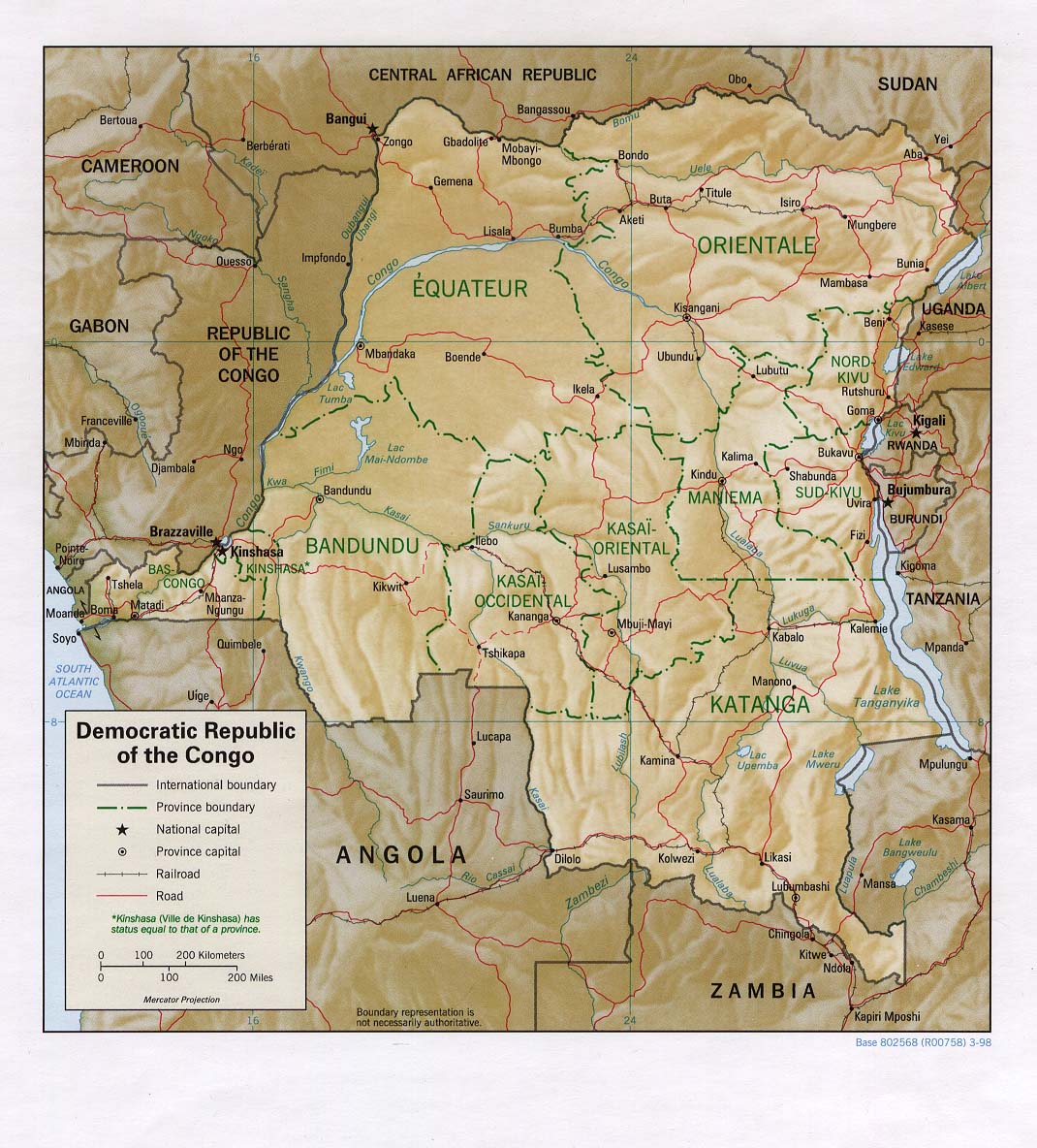
II. Map of Democratic Republic of Congo


III. Women and War Videos
1. GI Janes in Combat - Band of Sisters
More female soldiers have died in Iraq than in the Vietnam and Korean Wars and Desert Storm combined. BAND OF SISTERS is a book that details the compelling stories and experiences of 12 extraordinary women fighting in the War on Terror.


2. Female Soldiers in Iraq
From the Revolutionary War to the War on Terror, women have made endless contributions in the U.S. military. SSG David Baez reports from the front lines on the female's role in Iraq.


3.
 Women Fleeing War: Introduction (ICRC)
View video through this link.
This film tells the story of several women displaced by conflict in Colombia, Liberia and Sudan. Although the contexts are different, the challenges these women face bear striking similarities.
Armed conflict displaces people from their homes and livelihoods. Women often have to cope with the loss of close relatives and find new way to support themselves and their families. 


4. 
Lofo’s Story (ICRC)
View video through this link.
This film tells the story of five women displaced by conflict in Colombia, Liberia and Sudan. Although the contexts are different, the challenges these women face bear striking similarities.

5. Fatuma’s Story (ICRC)
View video through this link.
This film tells the story of five women displaced by conflict in Colombia, Liberia and Sudan. Although the contexts are different, the challenges these women face bear striking similarities.

6. 
Mariatu's Story (ICRC) 
View video through this link.
Mariatu copes with disability: the result of a physical attack on her during war. 
Eleven women tell their own individual stories of how their lives have been affected by war. Coping with displacement, physical and sexual violence, missing relatives, widowhood, detention... challenges and difficulties that these and thousands of other women must face in their daily lives.


7.  Rape as a Weapon of War -June 24, 2008 (UNICEF)
GOMA, Democratic Republic of the Congo, 24 June 2008 -- In a momentous step forward for the protection of women and girls in DRC and around the world, the UN Security Council has voted unanimously in favour of a resolution classifying rape as a weapon of war. 
Resolution 1820, which passed last week, reiterates the status of sexual violence as a war crime, a crime against humanity, a form of torture and a constituent act of genocide. It also advances efforts to sanction perpetrators and raise the political, military and economic cost of such violence.
"Sexual violence in DRC is on a scale and brutality unparalleled elsewhere in the world," says Child Protection Specialist Pernille Ironside in UNICEF's eastern DRC regional office. "While rape certainly existed prior to the war, the brutal nature of the violations that we see is appalling -- with over 1,000 women and girls raped per month. 


8. Four Million Dead, 200,000 Raped Daily in Congo (Democracy Now)
Amy Goodman interviews Christine Schuler Deschryver on Democracy Now, October 8, 2007 who describes the horrors of the ongoing war in Congo which by 2004 had claimed 4 million lives. The interview focuses on the extreme violence against women in Congo. Deschryver is associated with City of Joy, a project of Panzi Hospital in partnership with V-Day and Unicef. City of Joy will be a refuge for healed women, survivors of rape and torture who have been left without family and community. City of Joy will offer a safe haven, providing educational and income-generating opportunities, and support women in becoming the next leaders of the DRC.


9. Women in Congo- Weapon's of War (60 Minutes)
As seen on 60 Minutes: Women for Women International reports from DR Congo in concert with Anderson Cooper's piece for 60 Minutes, "War Against Women" featuring Women for Women International's program in the DR Congo. Also, please watch "The Greatest Silence" trailer and the film which features our Congo program as well. 


10. Women, War and Development (Foreign Exchange with Fareed Zakaria)
This video will discuss women, war and development with Zainab Salbi.

IV. Review Points

V. Discussion Questions

Wednesday, October 29, 2008

Session 8 - Humanitarian Intervention - Oct 29, 2009

I. Readings for Session 8
Required
1. Scott Straus, “Darfur and the Genocide Debate,” Foreign Affairs, January/February 2005. Access/Download here.
2. Mahmood Mamdani, “The Politics of Naming: Genocide, Civil War, Insurgency,” London Review of Books, 8 March 2007. Access/Download here.

II. Maps of Sudan, Darfur and Chad
(click links for larger size maps)


Department of State via USAID August 2, 2004


III. Videos on Humanitarian Intervention

01 Genocide in Darfur -AP (6:37)


02 Darfur Destroyed (6min)


03 Darfur in 10min


04 Jolie in
Chad – UNHCR


05 Darfur Now Trailer


06 Oil Prospects – oil in Darfur (Al Jazeera) 7min Real Player

Access video through this link. Real Player needed to view video.


07 Sudan slams ICC arrest call (CCTV)


08 Sudan Political Impasse (Al Jazeera) 0:00-2:45


IV. Review Points


V. Discussion Questions

Tuesday, October 21, 2008

Session 7 - Resource Wars - Oct 22, 2008

I. Readings for Session 7
Required
1. U.S. Agency for International Development, “Minerals and Conflict,” Washington, D.C.: USAID, 2004, pp. 1-15. Access/Download here.

Recommended
2. Michael L. Ross, What Do We Know About Natural Resources and Civil War?”, Journal of Peace Research, vol. 41, no. 3, 2004, pp. 337–356. Access/Download here.

II. Lecture Powerpoint Slides
Click the image below to access slides (in JPG format). You may download and view them as a Slideshow too!
2008 10 22 Resource Wars EDSQuimpo


III. Maps of Conflict Areas over Resources
 
(click links for larger size maps)


IV. Videos of Resource Wars
1. Africa's Oil (Business Week)
Author John Ghazvinian discusses how abundant oil has cursed a swath of countries in sub-Saharan Africa, from Angola and Nigeria to Chad and Sudan.


2. Nigeria's Oil: A Curse to Democracy [7:20-10:40] (June 5, 2008)
A documentary on the status of Nigeria's Democracy and how its resource of oil affects it.


3. Conflict over Water Scarcity (UNICEF, June 13, 2006)
UNICEF correspondent Sarah Crowe reports from Somalia on the drought in the Horn of Africa and Somalia's conflict over water.


4. In Focus: Congo's Bloody Coltan (Pulitzer Center on Crisis Reporting, Jan 24, 2007)
Produced by the Pulitzer Center, "Congo's Bloody Coltan" is a quick glimpse at coltan's role in Congo's civil war. It was featured on "Foreign Exchange with Fareed Zakaria" in the Fall of 2006. Coltan refers to Columbite-Tantalite, a metallic mineral used for the production of consumer electronics. 


5. Make it Quick - Blood Diamond
This scene highlights how diamonds are considered "lootable" resources, thus affecting the intensity and duration of a conflict. View video through this link. 
 
6. The Real Blood Diamond in Sierra Leone (National Geographic)
The Hollywood movie is set around actual historic events. See the reality: problems with diamond prospecting and diamond smuggling plagued the Western Africa nation of Sierra Leone, even after its civil war ended.


7. Myanmar's Deadly Ruby Trade (CNN, Sept 28, 2008)
A year after Myanmar's saffron revolution was crushed, CNN's Dan Rivers reports how rubies are propping up the junta.


8. Jewels of the Junta (Oct 2007)
Most of the world's finished rubies originate in Burma.
It is well known how the proceeds from sales of diamonds or oil can subsidize civil war and corrupt regimes, but less well known is how the international ruby trade sustains the Burmese junta. 


9. NGO Perspective on Mining and Community Development 
Karen Hayes, program director for Pact Democratic Republic of Congo, takes a new perspective on extractive industries and building partnerships to do development at the community level for collective impact.
Visit their website at
www.pactworld.org for more. 


10. 
Carmen de la Frontera Community Referendum 01
Documentary videospot to support the referendum, which will be held on 16th of september in the districts Carmen de la frontera and Ayabaca to give the people a chance to decide wheater they want a model of development based on mining.


11. 
Carmen de la Frontera Community Referendum 02
Community referendum held on September 16th, 2007 in the city of Sapalache, province of Carmen de la Frontera in the state of Piura, northern Peru.

The referendum was organized by the municipality in the hopes of peacefully resolving the conflict between the community and the Majaz mining company. The company plans to construct a massive copper mine in a fragile cloud forest that supplies water to the entire region.


12. 
Wangari Maathai - Resources and Conflict  (Fora TV, Oct 30, 2006)
Nobel Peace Prize winner Wangari Maathai speaks on the relationship between scarce natural resources and global conflict. 

Wangari Maathai on "Unbowed: A Memoir" Wangari Maathai, winner of the Nobel Peace Prize in 2004, is the founder of the Green Belt Movement in her home country of Kenya, an environmental group that has restored indigenous forests and assisted rural women by paying them to plant trees in their communities. Since 1977, it has planted more than 30 million trees in Kenya and has been replicated in dozens of other African countries. 

For more info and to view full video, go to this link. 


V. Review Points
Define the following terms:
  • Resource Curse
  • Resource War
  • Dutch Disease

VI. Discussion Questions
  • What are the three primary ways that valuable minerals are linked to violent conflict?
  • What are some lessons learned and policy recommendations given by the "Minerals and Conflict"USAID report? 
  • Discuss the role of Civil Society organizations such as NGOs in your home country that works for community issues dealing with environment damages, mining and chemical poisoning, etc.